.png)

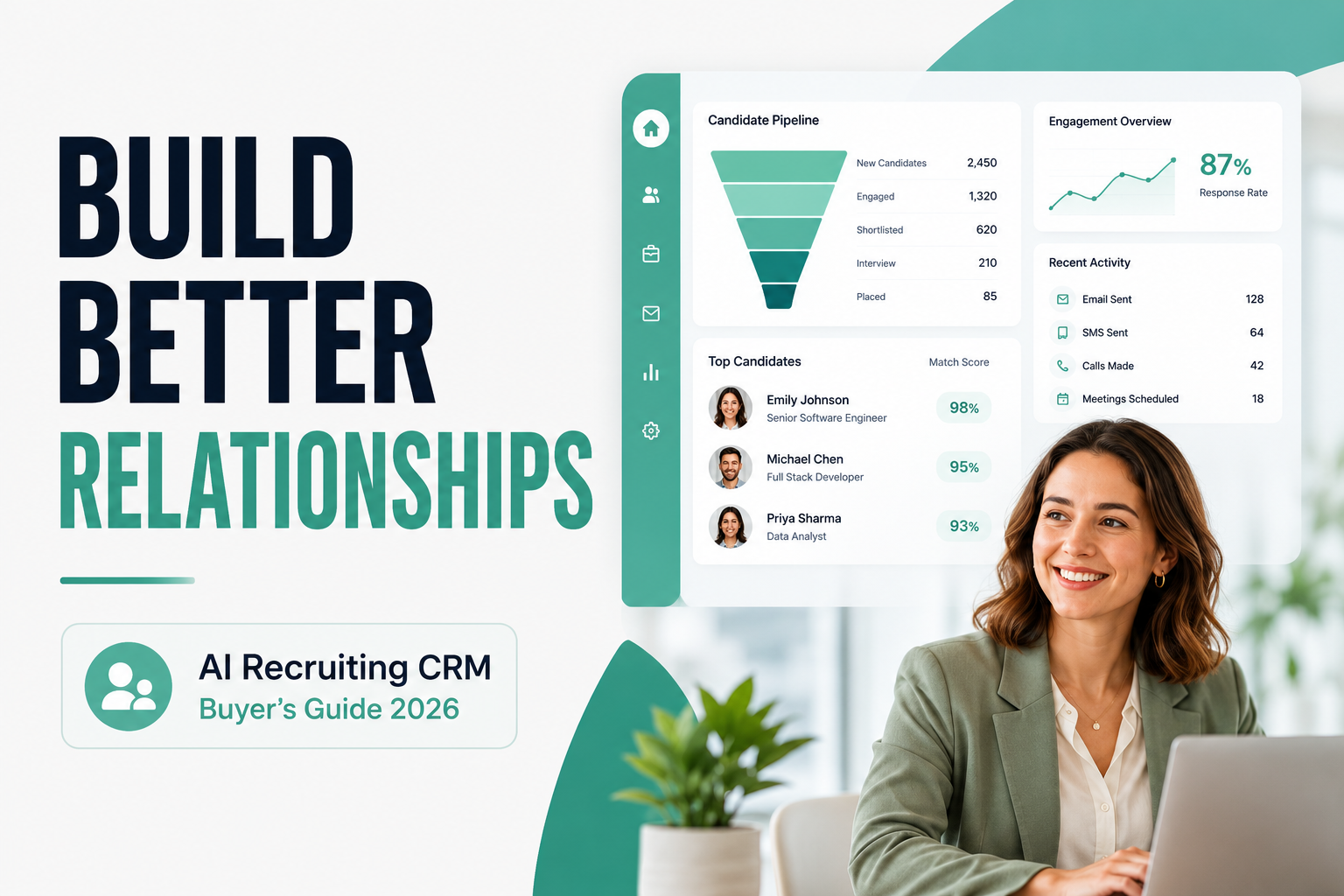
A recruiter has already spoken with hundreds of qualified candidates over the last two years. Many of them are perfect for today's new requisition, but finding the right people quickly inside a growing database is harder than it should be. This is where an AI Recruiting CRM changes the way staffing agencies manage candidate relationships.
Most staffing firms sit on candidate goldmines. Years of sourcing, interviewing, and contract placements leave applicant tracking systems packed with tens of thousands of profiles. Yet when a fresh job requisition arrives from a key account or VMS portal, recruiters often default to buying new candidate views on external job boards. The internal candidate database sits dormant because historical data becomes out of date, unorganized, and difficult to search using basic text filters.
An AI Recruiting CRM functions as an active candidate engagement engine. It works alongside your existing ATS to enrich out-of-date candidate profiles, automate multi-channel messaging via email and SMS, segment talent pools contextually, and continuously surface past applicants for new requisitions. For staffing agency owners and recruiting managers, deploying an AI Staffing CRM lowers candidate acquisition costs, improves response rates, and speeds up time-to-submit.
Managing candidate relationships manually at scale is impossible. A recruiter handling six open requisitions cannot personally send check-in emails, verify updated bill rates, or track contract end dates for three thousand passive professionals. Deploying an AI Recruiting CRM automates these administrative touchpoints, transforming a static record store into a dynamic talent community.
What Is AI Recruiting CRM?
An AI Recruiting CRM (Candidate Relationship Management) is an enterprise software platform designed to manage, engage, and nurture talent pools over time. Unlike a standard transactional database, it uses machine learning, natural language processing (NLP), and multi-channel communication tools to maintain candidate contact, track availability, and match past talent to new job orders.
In traditional staffing operations, the system of record acts like a electronic filing cabinet. Information goes in during an active hiring cycle, but once a position is filled, unplaced candidates are forgotten. An AI Recruiting CRM changes this dynamic. It treats every candidate as a long-term asset, using background data enrichment to update skills, titles, and phone numbers automatically while orchestrating personal outreach sequences based on candidate behavior.
How AI Recruiting CRM Works
An AI Recruiting CRM operates through a continuous feedback loop connecting data ingestion, candidate segmentation, multi-channel engagement, and recruiter workflows.
Step 1: Candidate Ingestion and Profile Standardization
The system ingests candidate profiles from job boards, website landing pages, inbound applications, and existing database records. Resumes in PDF, Word, or text format are parsed into structured data fields. The engine normalizes job titles, standardizes skill taxonomies, and deduplicates contact entries.
Step 2: Bi-Directional Data Synchronization
The CRM connects to your central ATS through native APIs. When a candidate profile is created, updated, or moved to a new stage in your CRM, that information syncs to platforms like Bullhorn, CEIPAL, or JobDiva in real time, keeping records aligned across your technology stack.
Step 3: AI Candidate Segmentation and Scoring
Machine learning models evaluate candidate work histories, skill recency, location preferences, and past bill rates. Candidates are automatically grouped into dynamic talent pools based on specializations, such as DevOps engineers with active security clearances or travel nurses holding active compact state licenses.
Step 4: Automated Multi-Channel Nurturing
The platform launches automated, personalized outreach sequences across email and SMS messaging. Rather than sending generic newsletters, the system sends targeted updates, such as asking a contractor if their current assignment is wrapping up 30 days before their scheduled end date.
Step 5: Matching and Recruiter Handoff
When a new client requisition drops, the AI matching engine scans the nurtured CRM database and generates a ranked shortlist of responsive candidates. The assigned recruiter receives an alert, reviews candidate activity notes, and initiates direct submittal conversations.
Recruiting CRM vs ATS
Staffing agency leaders often ask whether they need a Candidate CRM if they already operate a established ATS like Bullhorn, CEIPAL, or JobDiva. While both systems store candidate information, their operational focus is completely different.
An ATS is built for requisition management, client submittal tracking, job board posting, and compliance workflows. It excels at managing active applicants through defined hiring stages. However, an ATS is naturally transactional. It does not provide the marketing automation, relationship tracking, or multi-channel outreach tools required to maintain long-term connections with passive talent.
An AI Recruiting CRM fills this gap. It manages the top of the recruiting funnel, nurturing relationships long before a candidate applies to an active opening. Combining both systems gives your agency an active candidate sourcing engine alongside a compliant operational system of record.
| Functional Focus | Applicant Tracking System (ATS) | AI Recruiting CRM |
|---|---|---|
| Primary Purpose | Manages active requisitions and candidate submittals. | Nurtures long-term candidate relationships and passive talent pools. |
| Target Audience | Active job applicants for specific job orders. | Passive candidates, past applicants, and historical placement networks. |
| Communication Channels | Transactional emails and basic call logging. | Automated multi-channel email, SMS, and nurture sequences. |
| Data Hygiene | Static candidate records that decay over time. | Automated background data enrichment and rediscovery. |
| Candidate Matching | Basic Boolean keyword search queries. | Semantic concept matching, skill recency, and fit scoring. |
| Recruiter Impact | Tracks administrative progress and placement compliance. | Drives candidate response rates and automated pipeline generation. |
Key Features to Look For in an AI Recruiting CRM
Dynamic Candidate Database and Search
A central candidate repository that updates information automatically. Search functionality must support natural language queries alongside traditional filters, allowing recruiters to search by experience context rather than rigid syntax strings.
Resume Parsing and Normalization
High-accuracy document parsing converts varied resume layouts into standardized profiles. The parsing engine must recognize technical terminology, skill taxonomies, and employment durations accurately.
AI Candidate Matching and Ranking
Matching algorithms compare job order specs with CRM profiles, delivering ranked shortlists based on actual capability, domain experience, and availability instead of text counts.
Automated Candidate Rediscovery
Continuous background scanning surfaces past applicants whose profiles match new requisitions, reactivating historical database investments before buying external job board views.
Multi-Channel Communication Sequences (Email and SMS)
Built-in automation engines orchestrate personalized outreach across email and text messaging. Automated workflows adjust touchpoints based on whether a candidate opens an email, clicks a link, or replies to a text message.
Dynamic Talent Pool Segmentation
Automated grouping divides your talent pool into targeted communities based on skills, location, rate expectations, and shift preferences, ensuring communication stays relevant.
Bi-Directional ATS Synchronization
Real-time integration writes candidate activities, message records, and updated contact info straight back to systems like Bullhorn, CEIPAL, or JobDiva, maintaining a unified source of truth.
Explainable Match Scoring
Clear visual scorecards show recruiters exactly why a candidate matched a requisition, pointing out skill overlaps, recent project histories, and potential qualification gaps.
Recruiter Dashboards and Pipeline Analytics
Centralized operational views track recruiter outreach volumes, campaign response rates, talent pool growth, and submission conversion metrics across delivery teams.
Benefits for Staffing Agencies
Increased Recruiter Productivity
Automating routine check-ins, initial outreach emails, and profile updates frees up hours every day. Recruiters spend less time managing spreadsheets and more time building relationships with candidates, prepping them for client interviews, and closing placements.
Lower Candidate Acquisition Costs
Re-engaging talent sitting in your existing database reduces your reliance on external job board licenses and resume views. Rediscovering qualified contractors you already know allows your firm to keep margin dollars in-house.
Faster Time-to-Submit for VMS and MSP Orders
Winning submittal slots in competitive VMS portals requires speed. An AI Recruiting CRM continuously warms up your talent pools, allowing delivery managers to identify, screen, and submit pre-qualified contractors within minutes of a requisition drop.
Higher Placement Rates and Repeat Placements
Tracking contract end dates automatically allows your team to redeploy top contractors onto new assignments before their current project ends. Maintaining continuous engagement with high-performing talent improves contractor retention and increases repeat placements.
Improved Recruiter Collaboration
Shared talent pools and centralized communication logs prevent recruiters from overlapping on the same candidates. Team members gain complete visibility into candidate interaction histories, preferences, and availability statuses across the entire agency.
ATS Integrations
For an AI Recruiting CRM to add value, it must integrate directly with your agency's central system of record. Isolated data creates operational friction and leads to incomplete candidate histories.
| Supported System | Integration Type | Synchronized Data Points |
|---|---|---|
| Bullhorn | Native Bi-Directional API | Candidate notes, outreach history, parsed resumes, pipeline status, match scores. |
| CEIPAL | Native Bi-Directional API | Applicant profiles, SMS interaction logs, campaign responses, placement updates. |
| JobDiva | Direct API Connector | Candidate records, submittal attachments, activity logs, candidate status updates. |
| Avionté | Direct API Connector | Contractor profiles, skill tags, assignment timelines, communication records. |
| Enterprise ATS (Greenhouse, Lever, Workday) | Enterprise Webhooks & API | Stage updates, candidate evaluations, communication histories, compliance logs. |
The Importance of Bi-Directional Data Write-Back
A simple one-way export leaves your ATS out of date. Bi-direction integration ensures that when a candidate replies to an SMS campaign, updates their bill rate, or accepts an interview inside the CRM, that interaction logs automatically into your core ATS. Recruiters work within clean, aligned records without manual data re-entry.
Industry Use Cases
IT Staffing
Scenario: A direct client releases an urgent order for five Cloud Security Engineers with Terraform and AWS experience.
CRM Execution: The AI CRM scans 4,000 internal tech profiles, isolates developers whose past assignments ended in the last 60 days, and launches a personalized SMS sequence checking availability. Within 20 minutes, eight qualified engineers reply, ready for recruiter screening calls.
Healthcare Staffing
Scenario: An MSP requires 30 Travel Nurses holding active Texas compact licenses for night-shift ER placements.
CRM Execution: The system filters talent pools by active state licensure, compact status, and shift preferences, triggering an automated email and text campaign detailing weekly stipend numbers. Interested nurses click an embedded link to self-schedule screening calls.
Engineering Recruitment
Scenario: Search for a Senior Mechanical Engineer specialized in SolidWorks and medical device manufacturing.
CRM Execution: The matching engine parses project descriptions in historical candidate files, surfaces passive engineers placed three years prior, and triggers a personalized email check-in from the account manager.
High-Volume Commercial and Light Industrial Staffing
Scenario: A logistics hub needs 100 warehouse operators for a seasonal peak expansion.
CRM Execution: The platform executes mass SMS outreach campaigns to local talent pools, confirming shift availability, physical capabilities, and drug screen agreement automatically, delivering a fully vetted list to floor managers.
Executive Search
Scenario: Retained search for a Vice President of Supply Chain Operations.
CRM Execution: The CRM tracks long-term executive career milestones, company transitions, and board appointments, allowing search consultants to nurture executive relationships with relevant industry insights over months or years.
AI Recruiting CRM vs Related Technologies
Navigating recruiting technology requires understanding where a CRM fits alongside existing software solutions. The comparison tables below highlight key functional differences.
1. AI Recruiting CRM vs Candidate Database
| Capability Area | Static Candidate Database | AI Recruiting CRM |
|---|---|---|
| Primary Function | Stores documents and past applicant records. | Engages, updates, and nurtures candidate relationships. |
| Communication | Manual individual emails and phone calls. | Automated multi-channel email and SMS sequences. |
| Data Freshness | Information degrades over time. | Continuous background data enrichment. |
2. AI Recruiting CRM vs Email Automation Platform
| Capability Area | Generic Email Marketing Tool | AI Recruiting CRM |
|---|---|---|
| Staffing Context | Generic marketing templates and subscriber lists. | Built specifically for recruiting workflows, bill rates, and ATS sync. |
| Channel Support | Email focus only. | Integrated multi-channel outreach including SMS text messaging. |
| Skill Matching | None; relies on manual email list imports. | Automated semantic parsing, match scoring, and talent segmentation. |
3. AI Recruiting CRM vs Spreadsheet Tracking
| Capability Area | Spreadsheet Tracking | AI Recruiting CRM |
|---|---|---|
| Scalability | Breaks down quickly as applicant volume grows. | Scales seamlessly across hundreds of thousands of candidate files. |
| Data Integrity | Prone to human error, missed updates, and duplicates. | Automated profile updates, deduplication, and auditable logs. |
| Security & Privacy | Low security; vulnerable to data loss or leak. | Role-based access controls, SOC 2 compliance, and GDPR/CCPA alignment. |
Implementation Best Practices for Staffing Agencies
- Audit Data Health: Clean duplicate candidate files and organize legacy categories inside your ATS before connecting a new CRM.
- Define Multi-Channel Communication Rules: Establish clear messaging guidelines, opt-in procedures, and frequency limits to prevent candidate outreach fatigue.
- Set Up Bi-Directional Write-Back: Verify that communication logs, status changes, and match scores sync back to Bullhorn, CEIPAL, or JobDiva cleanly.
- Train Recruiter Teams on Nurture Workflows: Teach delivery teams how to interpret AI match scores, manage automated talent pools, and personalize follow-up messages.
- Monitor ROI Metrics Monthly: Track candidate response rates, database rediscovery placement percentages, and job board credit savings to measure performance.
How NinjaHire Supports AI Recruiting CRM Workflows
NinjaHire delivers an enterprise AI recruiting and candidate relationship management platform engineered specifically for staffing agencies, contract delivery desks, and high-volume recruiting operations.
By pairing candidate relationship management with automated multi-channel engagement, conversational AI phone screening, and native bi-directional ATS write-back, NinjaHire allows staffing firms to scale candidate submissions and fill requisitions in minutes.
Frequently Asked Questions
What is an AI Recruiting CRM?
An AI Recruiting CRM is enterprise software that helps staffing agencies manage, nurture, and engage talent pools. It uses machine learning to update candidate records, run personalized multi-channel outreach campaigns, and match past applicants to new client job orders.
How does a Recruiting CRM differ from an Applicant Tracking System (ATS)?
An ATS manages active job requisitions and client submittal stages. A Recruiting CRM focuses on candidate relationship management, long-term talent pool nurturing, multi-channel outreach automation, and passive candidate rediscovery.
Can an AI Recruiting CRM integrate with Bullhorn, CEIPAL, or JobDiva?
Yes. Modern platforms feature native bi-directional API integrations that write candidate notes, communication records, match scores, and updated contact info directly back to your central system of record.
How does an AI Recruiting CRM improve recruiter productivity?
By automating profile enrichment, initial outreach messaging, candidate check-ins, and data entry, recruiters save hours daily, allowing them to focus on candidate conversations and placement closure.
What is candidate rediscovery in a Recruiting CRM?
Candidate rediscovery automatically scans historical resumes in your database, enriches stale details with current web data, and flags past applicants who match new job requisitions.
Can an AI Recruiting CRM automate SMS text messaging?
Yes. Built-in automation engines allow recruiters to trigger personalized SMS text campaigns alongside email sequences, driving response rates up compared to email alone.
How does an AI CRM reduce external job board costs?
By reactivating candidate profiles sitting in your existing database, your firm fills job orders using owned data assets rather than buying additional job board view credits.
Is an AI Recruiting CRM suitable for contract staffing?
Yes. It is effective for contract staffing because it tracks candidate availability, contract end dates, and hourly rates, allowing delivery teams to redeploy talent quickly.
What is explainable match scoring in a candidate CRM?
Explainable match scoring gives recruiters a clear breakdown showing why a candidate matched a position, highlighting skill overlap percentages, work history context, and qualification gaps.
How long does implementation take for a staffing agency?
Most cloud-based AI Recruiting CRMs connect with your existing ATS via standard API keys within 1 to 2 weeks, requiring minimal operational downtime for your delivery team.
How does duplicate detection work inside a Recruiting CRM?
The system scans contact details, work histories, and document metadata to locate duplicate profile entries, merging fragmented files into a clean unified candidate record.
Does an AI Recruiting CRM help with compliance and data privacy?
Yes. Enterprise platforms adhere to strict data security standards (SOC 2, GDPR, CCPA), managing opt-out preferences and maintaining auditable communication logs automatically.
Can an AI CRM handle high-volume commercial and light industrial staffing?
Yes. High-volume teams use automated SMS text sequences and conversational screening tools to verify shift preferences, safety credentials, and immediate availability at scale.
How does semantic search work in a Recruiting CRM?
Semantic search analyzes skill concepts and title relationships. It recognizes that candidates listing Docker, Kubernetes, and CI/CD possess DevOps expertise even if those exact words are missing.
Can recruiters customize automated communication templates?
Yes. Team managers can build custom email and SMS templates, insert dynamic personalization tags, and define exact step-by-step follow-up rules based on candidate engagement.
How does an AI CRM improve contractor redeployment rates?
The platform tracks active assignment end dates, triggering automated check-in messages 30 to 45 days prior to contract completion to place top contractors into new client openings.
What is dynamic talent pool segmentation?
Dynamic segmentation automatically groups candidate profiles based on real-time factors like technical skill sets, geography, pay rate limits, and active work authorization status.
Does an AI Recruiting CRM replace human recruiters?
No. Automation takes care of repetitive administrative tasks like database updates and initial outreach, allowing recruiters to focus on candidate conversations and closing placements.
How does an AI CRM impact submittal-to-interview ratios?
By filtering candidates using contextual skill fit and verifying availability early, submittal accuracy improves, leading to higher client interview acceptance rates.